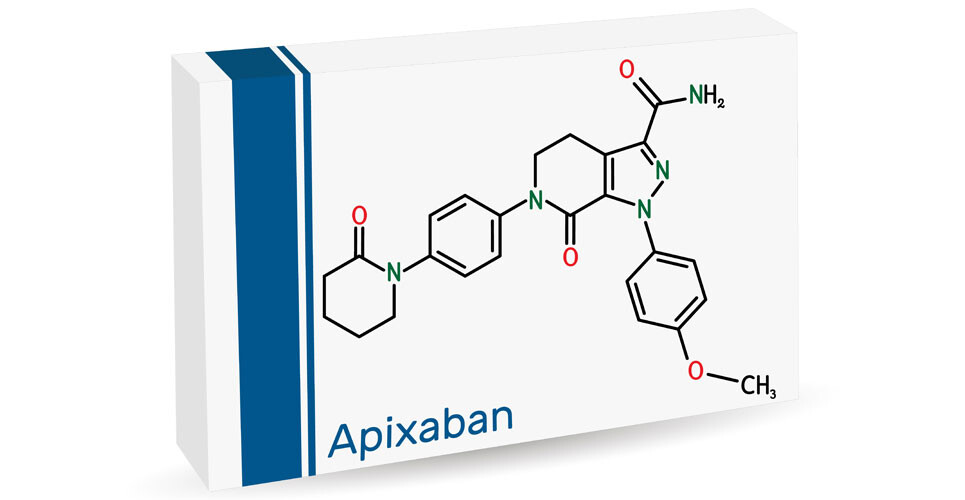
A class 4 medicines defect notification has been issued for several batches of the anticoagulant drug apixaban by the Medicines and Healthcare products Regulatory Agency (MHRA) as the patient information leaflets (PILs) do not contain up‑to‑date information.
Sandoz Ltd informed the MHRA that the PIL included in the affected batches of apixaban 2.5mg and 5mg tablets does not contain accurate information relating to the newly authorised paediatric indication for children aged 28 days to less than 18 years, and updated guidance regarding apixaban use following spinal/epidural catheter removal.
The quality of the tablets is not impacted by the missing information, the MHRA said, adding that after a discussion with the Department of Health and Social Care, it has concluded that as these products are critical for patients, these batches will not be repackaged and will continue to be distributed.
However, healthcare professionals are advised to be aware of the updated information regarding the use of apixaban in children aged 28 days to less than 18 years, and administration at least five hours after spinal/epidural catheter removal.
The MHRA states that healthcare professionals should also inform patients and carers of the approved dosing advice for children or patients with a catheter fitted.
Affected anticoagulant batches
A number of batches are currently in circulation and several have also been manufactured and packed with the previous PIL version and are due to be distributed.
Affected lot batch numbers (apixaban 5mg tablets):
- PS2891 – expiring 30/06/2028 – pack size: 56
- PT0565 – expiring 30/06/2028 – pack size: 56
- PT1417 – expiring 31/07/2028 – pack size: 56
- PU0476 – expiring 31/07/2028 – pack size: 56
- PU0481 – expiring 31/08/2028 – pack size: 56
- PV5375 – expiring 31/07/2028 – pack size: 28 – not yet distributed
- PW1623 – expiring 31/07/2028 – pack size: 28 – not yet distributed
- PW1624 – expiring 30/04/2028 – pack size: 28 – not yet distributed.
Affected lot batch numbers (apixaban 2.5mg tablets):
- PU1963 – expiring 31/07/2028 – pack size: 60
- PU3287 – expiring 31/01/2028 – pack size: 20
- PT4596 – expiring 31/07/2028 – pack size: 60
- PT2868 – expiring 31/07/2028 – pack size: 60 – not yet distributed
- PU2604 – expiring 31/07/2028 – pack size: 60 – not yet distributed
- PU2605 – expiring 31/07/2028 – pack size: 60 – not yet distributed
- PU2606 – expiring 31/07/2028 – pack size: 60 – not yet distributed
- PT1722 – expiring 30/11/2027 – pack size: 10 – not yet distributed.
Revised apixaban PIL information
Upon request, Sandoz Limited will provide hard copies of the updated PIL so that any remaining stock can be supplemented with the correct PIL information.
To request hard copies of the PIL, pharmacies can contact the Sandoz sales team with the following details: address, product with batch details, required number of leaflets.
Patients who experience adverse reactions or have any questions about their medication should seek medical attention. Any suspected adverse reactions should also be reported via the MHRA Yellow Card scheme.
The following updated PIL wording will be included in all future manufactured batches:
Section 1 – What is apixaban used for:
‘Apixaban is used in children aged 28 days to less than 18 years to treat blood clots and to prevent re-occurrence of blood clots in the veins or in the blood vessels of the lungs. For body weight appropriate recommended dose, see section 3.’
Section 2 – What you need to know before you take apixaban (Warnings and precautions):
‘Talk to your doctor, pharmacist or nurse before you take this medicine if you have any of the following: Had a tube (catheter) or an injection into your spinal column (for anaesthesia or pain reduction), your doctor will tell you to take this medicine 5 hours or more after catheter removal.’
Section 3 – How to take apixaban (paediatric dosing):
‘Use in children and adolescents… The dose depends on the body weight, and will be calculated by the doctor. Paediatric posology: Two tablets of Apixaban 5 mg twice a day for 7 days, then one tablet twice daily thereafter. Caregivers should observe dosing; scheduled doctor visits may be required to adjust weight-based dose.’
A version of this article was originally published by our sister publication The Pharmacist.