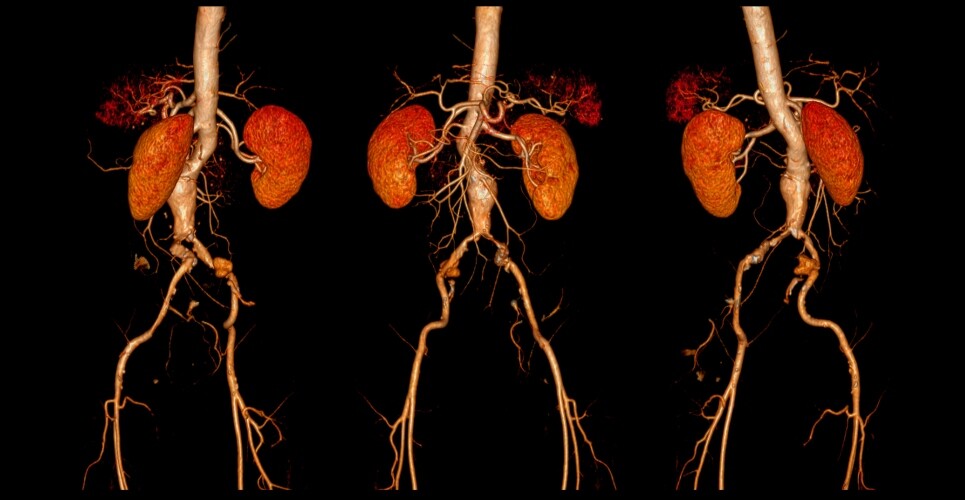
Could metformin become the first disease-modifying treatment for abdominal aortic aneurysm? With no established drug therapies available, momentum is building around a major international trial – explored here in our inaugural horizon-scanning feature.
Abdominal aortic aneurysm (AAA) remains a major unmet need in cardiovascular medicine. While screening programmes have improved detection, there is still no licensed pharmacological therapy to slow aneurysm growth or prevent rupture.
Current management of small AAAs relies on imaging surveillance, with intervention reserved for when aneurysms exceed size thresholds or become symptomatic. This creates a prolonged period during which patients are monitored but untreated, despite ongoing disease progression.
Metformin and AAA hypothesis and study rationale
The central hypothesis is that metformin can slow the progression of AAA, potentially delaying or preventing the need for surgery. This is based on observational data suggesting that patients with type 2 diabetes – particularly those receiving metformin – appear to have lower rates of aneurysm growth and rupture compared with non-diabetic individuals.
The development of AAA is driven by a combination of chronic inflammation, extracellular matrix degradation, oxidative stress and vascular smooth muscle cell dysfunction.
Metformin has several mechanisms that may counter these processes. It is known to activate adenosine monophosphate (AMP)-activated protein kinase, which can reduce inflammatory signalling, inhibit matrix metalloproteinase activity and improve endothelial function.1-3
Preclinical models have demonstrated that metformin can attenuate aortic wall inflammation and limit aneurysm expansion, supporting a potential disease-modifying role. Additionally, its metabolic effects, such as improving insulin sensitivity and reducing systemic inflammation, may contribute indirectly to vascular protection.
The new study aims to determine whether this apparent protective effect is causal.
Study design and early findings
The Metformin for Abdominal Aortic Aneurysm Trial (MAT) is a multicentre, double-blind, placebo-controlled study designed to provide definitive evidence on whether metformin can reduce the AAA growth rate.
It primarily evaluates changes in maximum aortic diameter over time, alongside key secondary endpoints, including time to surgical repair, rupture and AAA-related mortality.
The scale of the study, which spans the UK, Australia and New Zealand and aims to recruit around 1,000 patients, reflects the need for robust evidence in this field.
Participants typically include individuals with small AAAs (commonly 35–49 mm in diameter) who are not yet eligible for surgical repair. This represents the population with the greatest unmet therapeutic need.
Participants are randomised to receive metformin or placebo, with longitudinal follow-up to assess aneurysm growth, progression to surgical thresholds and clinical outcomes. The trial also includes rigorous safety monitoring, given the older age and comorbidity burden of the study population.
Early findings and supporting analyses indicate that metformin use is associated with slower aneurysm expansion and reduced inflammatory activity, consistent with prior observational data.
Although definitive trial results are still awaited, the accumulating evidence strengthens the rationale for further investigation.
Potential implications for AAA in clinical practice
If MAT confirms efficacy, metformin could represent the first pharmacological therapy for AAA and offer a non-surgical treatment option, particularly for people who cannot undergo surgery, whether because of the aneurysm’s shape or size, or its proximity to other major blood vessels.
This would introduce the possibility of medical intervention during the surveillance phase to slow disease progression.
Given its low cost, widespread availability and established safety profile, metformin would be readily implementable across healthcare settings globally.
Importantly, because metformin is already widely used in clinical practice, positive trial results could accelerate adoption into guidelines, potentially transforming AAA management from a purely surveillance-based approach to one that includes early pharmacological intervention.
Final words: the expert perspective
Professor Matt Bown, BHF professor of vascular surgery at the University of Leicester and lead investigator for the UK arm of the trial, which is supported by the British Heart Foundation, said: ‘Evidence suggests metformin could be the treatment for AAA we’ve long been looking for. Laboratory research indicates it may help prevent aneurysm growth by reducing inflammation in the aorta, a key driver of disease progression.
‘This trial involves patients who currently have no treatment options beyond waiting for their aneurysm to reach a size requiring intervention. We hope to determine whether metformin can be used to treat this group and provide greater reassurance during surveillance.’
References
- Golledge J et al. Metformin prevents experimental abdominal aortic aneurysm progression by reducing aortic inflammation and matrix degradation. Circulation 2017;135(9):827–39.
- Davis FM et al. Metformin inhibits vascular smooth muscle cell proliferation and extracellular matrix remodelling via AMP-activated protein kinase activation. Arterioscler Thromb Vasc Biol 2016;36(2):346–54.
- Yu X et al. AMPK activation by metformin suppresses inflammation and oxidative stress in vascular disease. Cardiovasc Drugs Ther 2019;33(3):321–9.
This article was originally published by our sister publication Hospital Healthcare Europe.