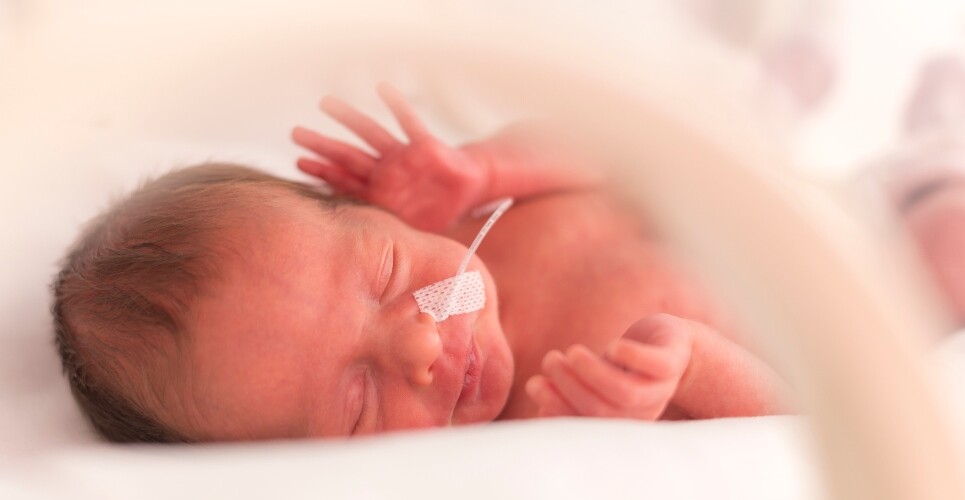
Starting exclusively enteral feeding from birth does not increase the risk of necrotising enterocolitis in clinically stable preterm infants, nor does it impact length of hospital stay, a recent trial has found.
Led by the University of Nottingham, the FEED1 trial sought to determine if exclusive enteral fluids from day one of life reduced neonatal admission compared with gradual feeding supplemented by intravenous fluids or parenteral nutrition. It also monitored necrotising enterocolitis and hypoglycaemia as safety outcomes.
This open-label, parallel-group, superiority study was conducted across 46 neonatal units in England, Scotland and Wales. It enrolled mothers of infants born between 30+0 and 32+6 weeks’ gestation.
Infants were eligible if they were younger than three hours old and considered clinically stable at the time of enrolment. Exclusion criteria included congenital anomalies making enteral feeding unsafe and infants who were small for gestational age (less than 10th centile) with reversed end-diastolic flow on antenatal umbilical artery doppler ultrasonography.
Enteral feeding and preterm infants
Between October 2019 and July 2024, 1,761 mothers were randomised, enrolling 2,088 infants. Of these, 1,047 infants were allocated to receive full milk feeds from day 1 (60–80 mL/kg per day without routine intravenous fluids). A further 1,041 were allocated to gradual milk feeding (up to 30 mL/kg on day 1) with intravenous fluids or parenteral nutrition.
Mean gestational age was 31.7 weeks in both groups, and mean birthweight was approximately 1.62 kg (3.57 lbs).
The results were published in The Lancet Child & Adolescent Health, with the researchers observing no difference between the groups for the primary outcome of length of hospital stay. The mean stay was 32.4 days in the full milk group versus 32.1 days in the gradual feeding group (adjusted difference –0.02 days; p=0.97).
Survival to discharge was 99.6% in both groups. Rates of necrotising enterocolitis were low and similar (0.4% vs 0.6%), as were episodes of hypoglycaemia and serious adverse events.
Key secondary findings showed that infants receiving full milk feeds reached full enteral feeding sooner, had fewer days of intravenous fluids and parenteral nutrition, fewer central and peripheral intravenous lines, and spent one fewer day in intensive care.
However, these differences did not translate into earlier discharge or improved breastfeeding outcomes at discharge or at six weeks.
The authors noted that variation in discharge practices between the hospitals could have influenced length of stay, while feeding intolerance and clinical judgement led to deviations from the assigned feeding strategy in some infants.
‘Help improve clinical practice’
Lead investigator Professor Shalini Ojha, professor of neonatal medicine at the University of Nottingham and honorary consultant neonatologist at University Hospitals of Derby and Burton NHS Foundation Trust, said: ‘The results mean babies born eight to 10 weeks early can be milk fed from the start, will not need intravenous nutrition, and will likely spend less time in intensive care.
‘They can be cared for in special care where families can be more involved and supported to establish breastfeeding. We are extremely grateful to the families who participated in the trial.’
Josie Anderson, policy, research and campaigns manager at the charity Bliss, which supported the trial, added: ‘These important findings have shown that babies can receive full milk feeds safely, without any compromise to their health while on the neonatal unit. We believe these findings will help improve clinical practice for babies born from 30 weeks, ensuring they can receive the best possible care and benefit from having fewer painful procedures.’
Ongoing follow-up to 24 months will assess longer-term outcomes, and the authors recommend further research for less mature or smaller preterm infants and those unable to tolerate early full milk feeds.
Reference
Ojha S et al. Full exclusively enteral fluids from day 1 versus gradual feeding in preterm infants (FEED1): an open-label, parallel-group, multicentre, randomised, superiority trial. Lancet Child Adolesc Health 2025; 9(12):827-36.
This article was originally published by our sister publication Hospital Healthcare Europe.