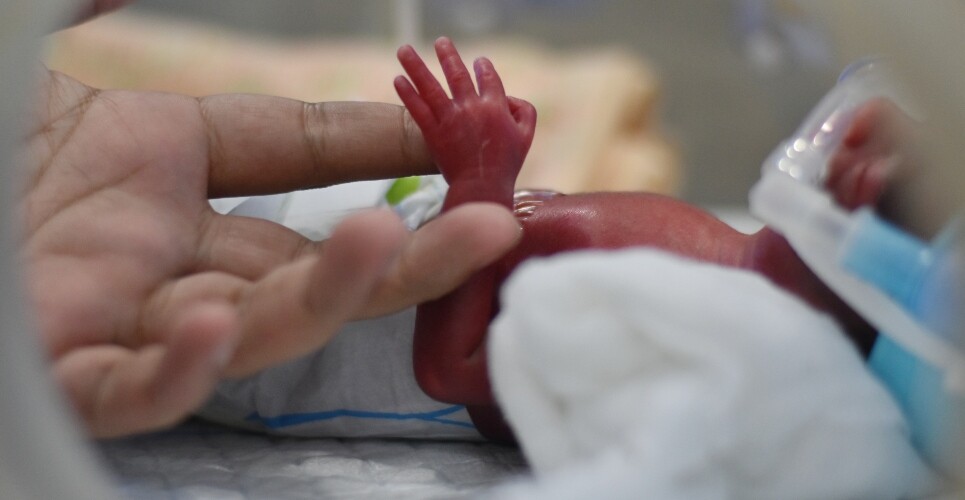
Introducing early prophylactic hydrocortisone for extremely preterm infants may increase bronchopulmonary dysplasia (BPD)-free survival without raising rates of severe neonatal complications, according to recent research from Sweden.
BPD is a common chronic lung disease affecting infants born before 28 weeks’ gestation and is often associated with inflammation, immature lung development and the need for prolonged respiratory support.
The study, published in JAMA Network Open and using prospectively collected data from the Swedish Neonatal Quality Register, evaluated whether the introduction of early prophylactic hydrocortisone in clinical practice was associated with improved survival without BPD and whether it increased the risk of adverse outcomes in extremely preterm infants.
Eligible participants were born before 28 weeks’ gestation and admitted to neonatal intensive care on their first day of life. They were classified as exposed or non-exposed based on whether they were born before or after the implementation of hydrocortisone prophylaxis at participating centres.
The final analysis included 1,106 infants (median gestational age of 25 weeks and six days and birth weight of 780 g), of whom 474 received hydrocortisone sodium succinate from the first day of life for 10 days to a total dose of 8.5 mg/kg, and 632 did not.
The primary outcome was survival without BPD at 36 weeks’ postmenstrual age.
Hydrocortisone prophylaxis improves BPD-free survival
BPD-free survival occurred in 154 of 474 infants in the hydrocortisone group (32.5%) compared with 185 of 632 infants in the non-exposed group (29.3%).
After adjustment for clinical variables, early prophylactic hydrocortisone was associated with increased odds of BPD-free survival (adjusted odds ratio [aOR] 1.62; 95% CI 1.16–2.27).
The incidence of BPD itself was also lower among infants receiving prophylaxis. The condition occurred in 49.2% of exposed infants compared with 54.6% of non-exposed infants (aOR 0.65; 95% CI 0.49–0.86).
Death before 36 weeks’ postmenstrual age occurred in 18.4% of exposed infants and 16.1% of non-exposed infants. However, the improved primary outcome appeared mainly to reflect a reduction in BPD incidence rather than a change in mortality rates.
Secondary analyses showed that infants receiving hydrocortisone had fewer days on mechanical ventilation after adjustment (adjusted relative risk 0.77; 95% CI 0.63–0.93).
Safety outcomes were broadly similar between groups. There were no significant differences in major neonatal morbidities including pulmonary haemorrhage, necrotising enterocolitis, severe intraventricular haemorrhage or retinopathy of prematurity.
Late-onset infection appeared more common in unadjusted analyses but was not statistically significant after adjustment.
Study limitations and future research
Overall, the findings suggested that the clinical use of early prophylactic hydrocortisone in extremely preterm infants was linked to better BPD-free survival rates and did not show a clear increase in severe neonatal complications, although ongoing monitoring of long-term outcomes remained necessary.
However, BPD was defined pragmatically by the need for supplemental oxygen at 36 weeks’ postmenstrual age rather than validated using oxygen reduction testing, which limited the ability to classify disease severity. Differences in BPD definitions across studies also complicated comparisons with earlier research, the authors noted.
The analysis also relied on clinician-reported registry data, which limited independent verification of outcomes, and the intention-to-treat approach meant that some infants might not have fully adhered to the treatment protocol.
The authors concluded that additional prospective research is necessary to identify which subgroups of extremely preterm infants would benefit most from prophylaxis, noting that long-term follow-up studies are warranted to assess neurodevelopmental outcomes and better understand its potential risks and benefits.
Reference
Smedbäck V et al. Early Prophylactic Hydrocortisone and Bronchopulmonary Dysplasia-Free Survival in Extremely Preterm Infants. JAMA Netw Open 2026;9(2):e2560146.
This article was originally published by our sister publication Hospital Healthcare Europe.