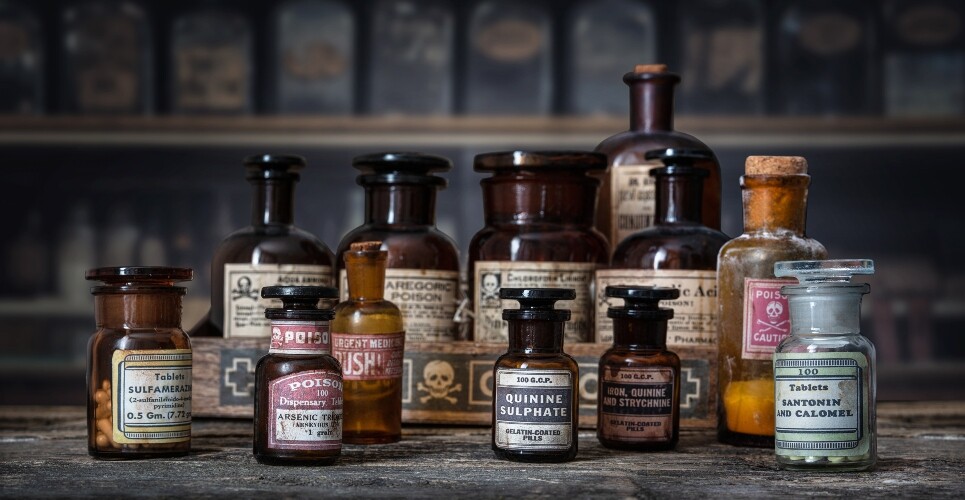
Hospital pharmacy was practised in Britain in Roman military hospitals, monasteries and medieval infirmaries and undertaken by monks and apothecaries, with registered pharmacists being employed only from the late 19th century. In this first article from Hospital Pharmacy Europe’s new media partner the British Society for the History of Pharmacy, Professor Stuart Anderson discusses the history of hospital pharmacy and how it has influenced the profession today.
The first hospitals in which pharmacy was practised in Britain were the Roman military hospitals, or valetudinaria. With the end of Roman occupation of Britain in 410 CE, hospital pharmacy continued through medieval hospitals and monastic infirmaries, where monks grew herbs and prepared medicines.
The dissolution of the monasteries from 1536 CE meant the loss of hospitals, but in London, King Henry VIII was persuaded to restore those of St Bartholomew, St Thomas and Bethlem – or Bedlam for the ‘insane’.
The number of hospitals then grew steadily. In the 18th century, many resulted from patronage by local benefactors, and in the early 19th century a large number of small, often specialist hospitals were founded by doctors for eye, skin, nervous and other complaints.
By the end of the 19th century most hospitals were voluntary or municipal. Voluntary hospitals were funded by benefactors, and treatment in them required a sponsorship letter from one of their subscribers. Municipal hospitals were funded by local authorities and provided services for poor people and those unable to obtain the support of a voluntary hospital subscriber.
Municipal hospitals were usually larger than their voluntary counterparts but were fewer in number. Voluntary hospitals were much better funded than municipal ones, with physicians usually providing their services for free in exchange for the opportunity to use the hospital for training their students. Hospital pharmacy progressed rather differently depending on the type of hospital.
Hospital pharmacy and the decline of the apothecary
During the 18th and early 19th centuries, voluntary hospitals generally purchased pharmaceutical supplies from retail pharmacies run by apothecaries or chemists and druggists, although some larger voluntary hospitals – many of which served as teaching hospitals – employed an apothecary directly.
These hospital apothecaries often combined the roles of pharmaceutical supplier and resident medical officer. However, other duties were often added. Indeed, at both Westminster and St George’s Hospitals in London, the apothecary also acted as anaesthetist, and at St George’s as medical electrician too.
The Apothecaries Act of 1815 marked a turning point, confirming the role of apothecaries as general medical practitioners and their hospital duties tended to emphasise the role of resident medical officer rather than dispenser. As a result, most subsequently sidelined their pharmaceutical interests.
There were no controls over the qualifications of people who might be entrusted with the storage of drugs and the compounding of medicines.
The rise of the pharmacist
The employment of hospital pharmacists as a distinct group began only when they succeeded to posts vacated by hospital apothecaries, or by dispensers where apothecaries had not been appointed. The term ‘dispenser had first been formally used in the Royal Navy when it was applied to Henry Blakey at Greenwich Hospital in 1713.
With the foundation of the Pharmaceutical Society of Great Britain in 1841, changes gradually occurred in the roles, titles and identities of pharmacy practitioners.
Dispensers were gradually replaced by chemists and druggists, who had passed the Pharmaceutical Society of Great Britain’s minor examination, or pharmaceutical chemists who had passed the major examination.
By the time St Mary’s Hospital, London, opened in 1851, the days of the apothecary as the person responsible for dispensing medicines were effectively over, and a dispenser was appointed from the start.
At Westminster Hospital the title ‘apothecary’ was used between 1719 and 1860, ‘senior dispenser’ between 1860 and 1870 and ‘pharmaceutist’ from 1870 onwards.
At St George’s Hospital, the last apothecary resigned in 1871, and a dispenser took over pharmaceutical duties. In 1882, the hospital decreed that the dispenser must be a member of the Pharmaceutical Society, although by this time most post-holders had this qualification. The title changed to ‘pharmacist’ only in 1919.
The 1868 Pharmacy and Poisons Act regulated the sale of poisons, but exempted hospitals, infirmaries, asylums, sanatoria, dispensaries and poor law institutions – whether supported by public funds and public authorities or by charities and voluntary subscriptions – from the legal requirement to employ qualified dispensers or to comply with the regulations governing the storage and supply of poisons to their patients.
Collaboration and progress in the 20th century
A first step towards securing the employment of registered pharmacists in public institutions was the need for collaboration, which began with the formation of the Poor Law Dispensers Association in 1897. See Box 1 below for a full timeline of the hospital pharmacist profession and associated organisations.
Despite this steadily evolving representation, at the turn of the century, the lot of the hospital pharmacist in Britain was a miserable one.
Pharmacists working in hospitals and public institutions competed with dispensers holding the assistants’ certificate of the Society of Apothecaries, who invariably accepted lower wages.
The work consisted mainly of routine dispensing, usually with little scope for making use of skills acquired during training, and even less for demonstrating initiative.
Pharmacist Frederick Bullen recalled that ‘the dispenser was of no known origin, being perhaps an intemperate uncertificated medico, an ex-naval or army compounder, an Apothecaries’ Society diplomat, or less often, a chemist and druggist’.
This view of the hospital pharmacist was still widespread in the 1920s. William Phillipson, who became a hospital pharmacist in Manchester, said: ‘At that time it was considered a “dead-end” profession, in evil repute and certainly unremunerative. It was even said that only men who wanted time to drink and lacked ambition became hospital “dispensers”!’
The one good thing was that ‘there were unlimited prospects for progress’, he added.
That was certainly the case for women. In 1908, around 100 women were registered with the Pharmaceutical Society and employed in pharmacy, with 60% of those being dispensers in hospitals and other institutions. Women were known to have a keen eye for economy.
Writing in 1908, Margaret Buchanan, a founder of the Association of Women Pharmacists and the Pharmaceutical Society’s first female council member, observed: ‘The orderliness and attention to detail, the tact and desire to please, which are supposed to be natural to most women, are a most necessary part of their stock in trade: and there have been not a few instances where women’s business capacity, and an up-to-date knowledge of drugs, and economical methods, have led to practical appreciation on the part of committees.’
Hospital pharmacy practice realities
For many, hospital pharmacy remained an unattractive option for bright young pharmacists, particularly in places where it was practised largely as it had been for many years.
To this end, Frank Newman who, as a newly qualified pharmacist, was appointed to University College Hospital in London in 1921, said at that time: ‘There were on the shelves bottles with gilt and black labels on them; bottles which I am sure had been on the shelves for over 50 years.’
What’s more, manufacturing in hospital pharmacies often extended beyond medicines to household and veterinary products, as William Phillipson, a young pharmacist who joined the staff at Manchester Royal Infirmary in the 1920s, recalled: ‘You were expected to assist the economy of the hospital. It was appreciated if you made baking powder, whitening for theatre shoes, soda water and lemonade.
‘In fact, I made horse balls, pig drenches and other medicines for the animals belonging to the hospital authorities. We had a special department turning out grosses of siphons for the Manchester Board of Guardians’ hospitals.’
Cost control was central to daily work, with strict scrutiny of hospital expenditures required, which is all too familiar for hospital pharmacists today.
Frank Newman explained: ‘It was quite common for me to be asked to do a check on the cost per prescription. If it exceeded sixpence a week there was an enquiry. A list of expensive drugs was displayed in the departments, and some things (for example, potassium iodide mixture) were limited to three days’ supply.’
Yet one key difference was the fact that no allowance was made for costs of containers, and outpatients were expected to provide their own. ‘In those days, patients had medicines by the pint or quart, and we didn’t mind what sort of bottle they had it in. They brought their own,’ he said. ‘We began to object to beer bottles or milk bottles, but we certainly did not mind giving them ointment in a cup with a broken handle.’
Establishing a professional identity
The process of establishing a professional identity for hospital pharmacists and persuading institutions to take on only registered pharmacists to run their pharmacy departments was a slow one, but by 1920 it was close to completion.
Frederick Bullen, who by this time was chairman of the Public Pharmacists’ Association and would later become the Guild of Public Pharmacists’ first vice president and its second president, noted in his 1921 annual report that ‘your Council has used every endeavour to ensure that registered pharmacists should be appointed to fill vacancies for the post of dispenser at public institutions’.
He added: ‘It is satisfactory to record that most public bodies now stipulate that candidates for the post of dispenser must hold the pharmaceutical qualification.’
The year before, the Public Pharmacists Association had agreed to co-operate with the pharmacy section of the Hospital Officers Association and the London Group of the Association of Women Pharmacists on matters of common interest.
Subsequently, on 23 January 1923 the inaugural meeting of the new Guild of Public Pharmacists was held at the Pharmaceutical Society’s headquarters.
Pharmacists working in public institutions in Great Britain were now united in a single organisation.
The foundations for modern hospital pharmacy
John Lloyd, who later became chief pharmacist at Manchester Royal Infirmary, commented: ‘Prior to the formation of the Guild, few pharmacists deliberately chose the hospital service as a career. Apart from a few dedicated men, it was largely the refuge of those who, for one reason or another, failed to make the grade in retail pharmacy, and they had few professional aspirations.’
Hospital pharmacy in Britain had evolved from a disparate group of practitioners with diverse interests and aspirations into a distinct, organised profession with shared ideals and expectations.
Progress was shaped as much by institutional structures, legislation and economic pressures as by clinical need.
Professional identity has been forged gradually through collective action, and since the early 20th century, clearer roles, recognised qualifications and unified voices have laid the foundations for the profession’s expansion and further integration in the decades that followed.
Author
Stuart Anderson BSc MA PhD FRPharmS FRHistS
Editor, Pharmaceutical Historian, and committee member, British Society for the History of Pharmacy
Emeritus professor in pharmacy history, London School of Hygiene and Tropical Medicine, UK
Further reading
- Granshaw L, Porter R. The Hospital in History. 1989; Routledge London.
- Anderson S. An intemperate uncertificated medico: The hospital pharmacist in Great Britain before 1923. Pharmaceutical Historian 2001;31(1):12–16.
- Ellis S. The development of pharmacy in hospitals. In Anderson S (ed) Making Medicines: A Brief History of Pharmacy and Pharmaceuticals. 2005; Pharmaceutical Press London:135–54.
Hospital Pharmacy Europe is delighted to support the British Society for the History of Pharmacy as a media partner. Formed in 1967, the Society aims to advance education in the history of pharmacy for the public benefit, stimulating interest and promoting and encouraging research and study into the history of pharmacy within the UK and beyond via its open access journal, free online lectures, annual conference and more.