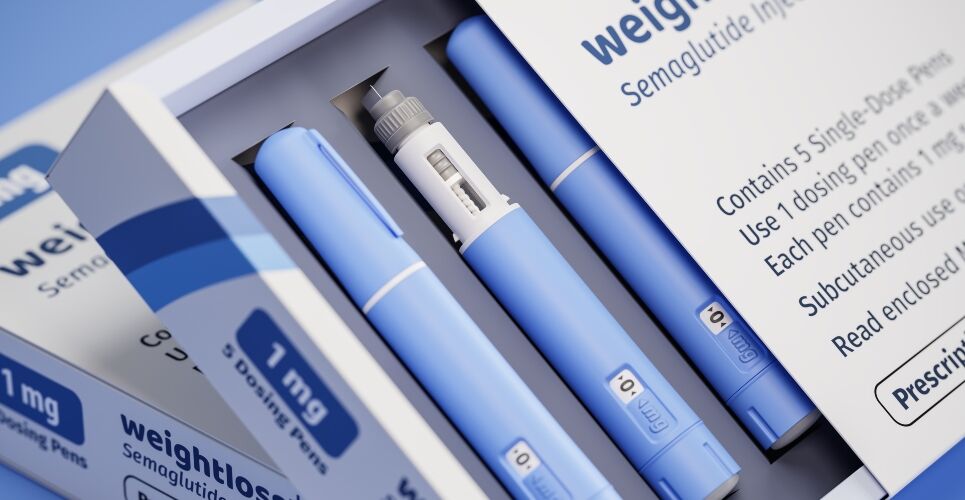
More than a million patients who have had a myocardial infarction or stroke and are overweight will now be eligible for weight loss jabs on the NHS after a new NICE technology appraisal recommended their use.
A weekly injection of the weight loss drug semaglutide (brand name Wegovy) can be offered to individuals who have had a myocardial infarction, a stroke or have symptomatic peripheral arterial disease if they also have a body mass index (BMI) of at least 27 kg/m².
The maintenance dose of 2.4mg should be offered alongside a reduced-calorie diet and increased physical activity, NICE said in the final draft guidance.
The decision was based on data from the SELECT trial of more than 17,600 participants with established cardiovascular disease but not diabetes who took semaglutide or placebo alongside their existing medicines, such as statins, and also had lifestyle advice.
In 2023, the trial reported a 20% reduced risk of a serious cardiovascular event compared with a placebo.
Presenting the evidence to NICE, its manufacturer Novo Nordisk said the cardiovascular benefit was seen early in the clinical trial, before significant weight loss occurred.
A confidential commercial deal has been agreed between the company and the NHS for Wegovy as part of the recommendation, which NICE said was ‘well within’ the range it considers to be an effective use of resources.
The RPS responds
Commenting on the approval, Professor Claire Anderson, president of the Royal Pharmaceutical Society, said: ‘For this guidance to translate into patient benefit, implementation must ensure patients are appropriately identified, supported and monitored over time.
‘Pharmacists have a vital role in supporting safe use, improving adherence and managing long-term treatment.
‘Expanding access to treatment must be backed by clear clinical pathways that integrate pharmacy across all settings, alongside workforce capacity and sustainable funding.’
She added: ‘With continued pressure on primary care, pharmacists will be central to delivering the Government’s ambitions to boost prevention and deliver more care closer to home.’
Experts highlight need to avoid postcode lottery
Several clinicians also welcomed the move but echoed Professor Andersons question’s about how the NHS would implement the recommendation.
Professor Riyaz Patel, clinical lead for preventive cardiology at Barts Heart Centre and professor of cardiology at University College London, described the recommendation as a ‘very important development’.
He said: ‘Estimates suggest there are about four million people in the UK living with atherosclerotic cardiovascular disease, who remain at very high risk of subsequent or further heart attacks and strokes, and related deaths despite our best available treatments.
‘This risk comes with significant personal cost but also financial impacts on the NHS.’
He added that the exact mechanism underpinning the cardiovascular benefits seen with semaglutide is still being investigated, but is partly attributed to multiple parallel metabolic and vascular health benefits.
‘The only other question practically will be how this drug will be delivered and the capacity within the health system to do so. We know for example that other highly beneficial drugs like inclisiran, for cholesterol lowering have been variably delivered leading to significant postcode lotteries,’ he said.
‘Integrated care boards must ensure this does not happen with this NICE TA, else we risk exacerbating health inequalities, when if anything, this should be a powerful tool to reduce health inequality.’
Semaglutide ‘now considered important medicine’ for prevention
Dr Sonya Babu-Narayan, clinical director at the British Heart Foundation, said: ‘So-called “weight loss drugs” like semaglutide have proven benefits beyond reducing the number on the scales – they are now considered important medicines for preventing deadly heart attacks and strokes.
‘Today’s guidance will no doubt help save lives as cardiovascular disease is still one of the country’s biggest killers.’
Professor Robert Storey, professor of cardiology at the University of Sheffield, noted that while huge strides had been made in reducing the risk of myocardial infarction and stroke after a cardiovascular event, obesity is associated with harmful inflammation and blood clot risk that is not fully addressed by conventional treatments.
NICE’s recommendation is a ‘step towards even more effective management of heart attack and stroke risk’ he said.
But he added: ‘Prescribing of semaglutide needs to be appropriately targeted since GLP-1 drugs can reduce muscle mass as well as fat so physical activity, such as resistance training, is important to counteract potential negative effects on muscle strength, which may not be feasible in frail people.
‘The benefits also need to be balanced against the risk of side effects. These issues and the need for training people to inject the drug as well as ongoing monitoring and prescribing requires the allocation of NHS resources to ensure the benefits of this NICE guidance can be fully realised.’
In 2024, the Medicines and Healthcare products Regulatory Agency (MHRA) approved the use of semaglutide for cardiovascular prevention in obese and overweight patients with established cardiovascular disease.
More recently, the MHRA issued drug safety alerts advising healthcare professionals to remain vigilant for signs and symptoms of acute pancreatitis and non-arteric anterior ischemic optic neuropathys in patients treated with GLP-1 receptor agonists.
A version of this article was originally published by our sister publication Pulse.