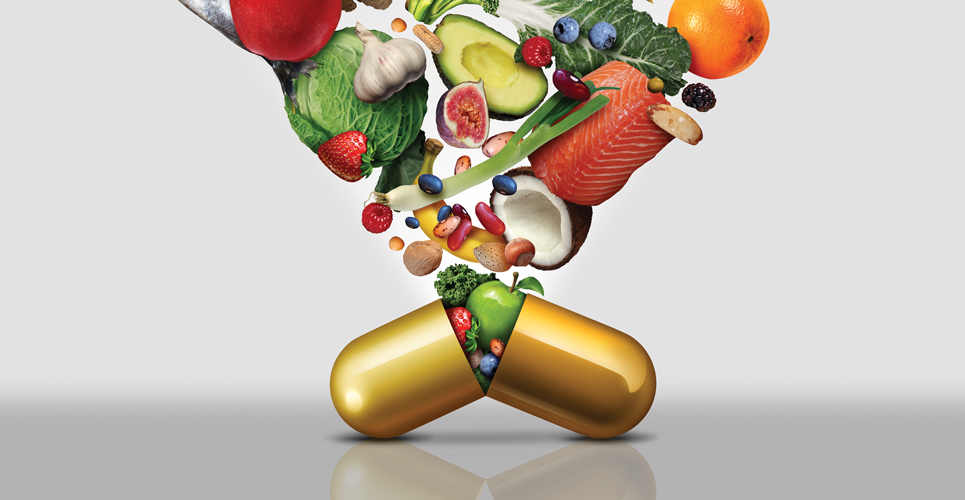
The association between nutrition and allergy is complex but emerging evidence points to nutrition having an positive influence on allergic disease. This review gives an overview of the current knowledge.
The incidence of allergic diseases, such as asthma, rhinitis, eczema and food allergies, is rising globally.1–4 Allergic disorders change over time, progressing from eczema and food allergy in infancy and early childhood to asthma, rhinitis and inhalant allergy in older childhood, adolescence and adulthood. This is referred to as the ‘allergic march’ (or atopic march).5
Due to the known immune-modulatory factors of numerous nutrients, epidemiological studies that investigate factors which might affect the development of food allergy look at nutritional intake in maternal diet, infants and children. Nutrients of particular interest are polyunsaturated fatty acids (PUFAs), antioxidant vitamins (vitamins A, C, E and β-carotene), vitamin D, iron, selenium, zinc and folate.6–9 Non-nutrient factors in the diet such as pre- and probiotics are also considered. This interest in establishing a possible link between nutrition and allergic diseases has progressed to incorporate new methodologies used in the analysis of dietary intake, which allow the whole diet to be investigated. These new methodologies also allow the link between ‘healthy’ and ‘unhealthy’ dietary factors and allergic disease to be considered.10,11 As the aetiology of allergic disease appears to be so complex, analysis of the diet in this way might help identify nutritional/diet factors that are associated with its development.12
Single nutrients
To date, PUFAs have been the most extensively studied immuno-modulatory nutrient in relation to allergic disease. There have been two Cochrane reviews looking at PUFA supplementation and allergy outcomes. The first looked at maternal supplementation with the authors concluding there was limited evidence it reduced allergic disease in children.13 The second looked at PUFA supplementation in infancy and found no evidence that supplementation in infancy had an effect on infant or childhood allergy.14
Vitamin D and its relation to allergic disease has received considerable attention in recent years; latitudinal differences in auto-injector prescriptions for food-induced anaphylaxis15 and hypoallergenic infant formula use16 suggesting a causal link with low vitamin D status. Such aassociations between vitamin D intake/status and allergic disease come from a diverse literature, including cross-sectional, case-control and cohort studies, with variable outcome definitions, analytical procedures and study quality.17–22 However, direct evidence appears to come from an Australian study, which showed low vitamin D status increased the risk of food allergy approximately tenfold.23
Lower intakes of antioxidants are suggested to reduce antioxidant defences and increase the risk of allergic disease.24–28 In particular, adequate intake of vitamins A, E and C and zinc might confer some protection against allergic conditions.29
Non-nutritional factors
In recent years, there has been increasing evidence of the role the gut microbiota plays in overall health,30 and this is no different for allergic disease. A number of studies have found an association between infant intestinal microbiota and the development of allergic disease.31 Because particular foods/dietary constituents can promote differing types of microbiota, it is hypothesised that altering the diet can affect the prevalence and severity of allergic conditions. Prebiotics and polyphenols from the diet alter the gut microbiome along with probiotics, which either confer their effect directly or via their metabolites, for example, short chain fatty acids metabolites such as butyrate.32 While there are promising signs for the use of prebiotics in the prevention and treatment of allergic conditions, as yet there are still many unanswered questions as to their role, which need answering by well-conducted research to advance our knowledge in the field.33,34 This is a similar situation with the role of probiotics in allergic disease with the most recent Cochrane review on the subject stating that further research is needed before probiotics use can be recommended for allergy prevention,35 and a World Allergy Organisation systematic review stating there was need for high quality intervention trials.36 Such trials would also provide information on which strains might be the most effective for allergy prevention and treatment.
Diet patterns
The relationship between the food that we eat and any health outcome is complex and there is an emerging recognition that because nutrients and foods are not eaten in isolation, trying to find an association between single nutrients and a disease state is an unrealistic expectation. Related to this,
a number of studies have found an association between the whole diet, (including diversity), and allergic disease.37-41 Additionally, research has reported an inverse association with processed foods and allergic outcomes. An EAACI position paper on diet diversity in allergy has been published, with the aim of understanding the role of diet diversity on allergy outcomes and to set standards for conducting research in this field.12 While a major output of the paper is to provide a detailed narrative review of information on diet quality and diet patterns, it also summarises possible mechanisms of how a diverse diet can affect allergy outcomes due to: i) its effect on the microbiome; ii) indirectly affecting allergy outcomes by providing nutrients associated with prevention of allergic disease (for example, PUFAs and prebiotics); iii) and exposing the individual to a wider variety of dietary antigens, thus promoting immunologic tolerance.
Conclusions
While there is a lot of ongoing work investigating the relationship between nutrition and allergic disease with some promising theories, there is, as yet, no definitive evidence regarding any such the relationship. Ongoing work will hopefully provide more robust evidence to support these theories.